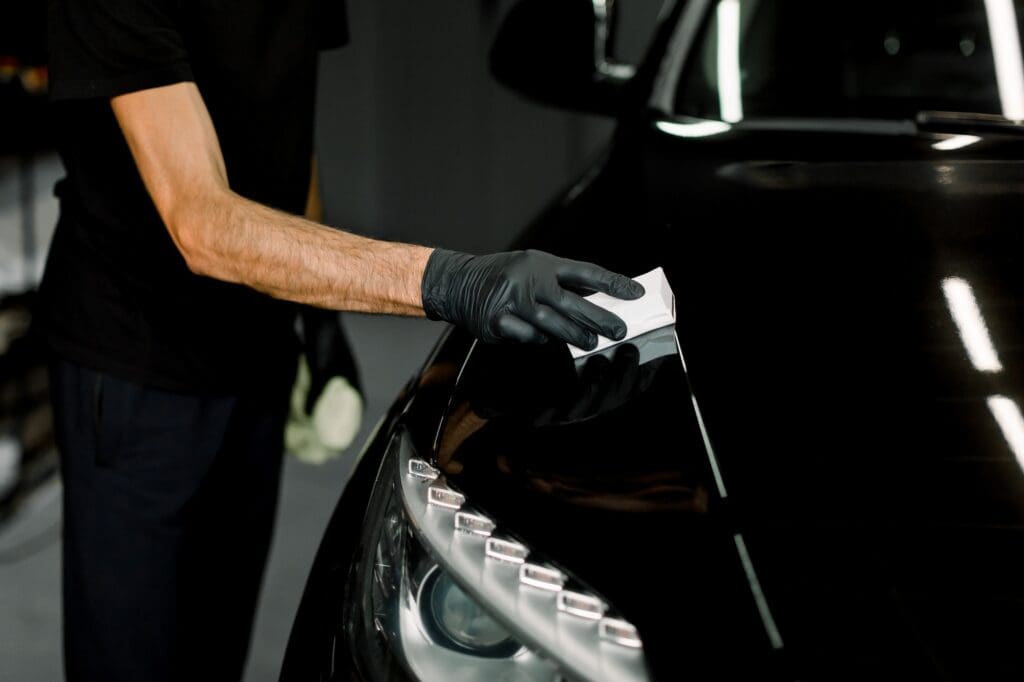
Rock chips and scratches are among the most common reasons a vehicle’s paint starts to look tired, and a chip that breaks through the full paint layer can expose the primer or the panel material underneath to moisture, though many smaller chips stop within the paint itself. A few simple habits lower that risk, but no product removes it completely. This guide explains what causes the damage, how the main protection options differ, and when a professional assessment makes sense.
What Rock Chips and Scratches Do to Your Paint
How Rock Chips Happen
A rock chip occurs when a small stone or piece of debris strikes your paint at speed and removes a piece of the finish, and the damage can range from a shallow mark in the clear coat to a chip that reaches the primer or the panel underneath. Highway driving, unpaved roads, and following trucks or construction vehicles raise your exposure, because tires throw debris up from the road surface. Road grit and sandblasting dust can also wear paint gradually over time rather than removing it in a single impact.
The panels most likely to collect chips are the ones exposed to debris from the road and from other vehicles:
- Hood and front bumper
- Front fenders
- Side mirrors
- Rocker panels and the lower portion of the doors
- Rear guards behind the rear wheels
Each of these areas either faces oncoming traffic or sits low enough to catch what tires throw up.
Why an Ignored Chip Costs More Later
Paint does more than look good. It seals the metal and the primer underneath, so a chip that reaches bare metal lets moisture in and rust can start beneath the surface. Even a chip that has not gone through leaves a sharp edge where the paint can lift and flake, and a small repair completed early is usually simpler than refinishing a panel after rust has spread.
How to Spot Damage Before It Spreads
Check your paint at least once a month, ideally after you wash the car. Look for small dots of missing paint on the hood, fenders, and mirrors, along with scratches deep enough to catch a fingernail. Also watch the panel edges and the areas behind the wheels, where debris collects, and treat paint that has flaked or lifted at a chip edge as damage that has already moved past the surface.
The Main Protection Options and What Each One Can Do
Each option works differently, so it helps to know which problem it solves before you spend money on it. The sections below cover paint protection film, ceramic coating, and day to day maintenance in turn.
Paint Protection Film, Also Called Clear Bra
Paint protection film is a clear urethane film that is applied over painted panels, most often to the hood, front bumper, fenders, and mirrors. The film absorbs the force of small impacts, so the film takes the hit instead of your factory paint. Clear bra is another name for paint protection film rather than a separate product, and it is not a substitute for ceramic coating, because the two do different jobs.
Films are often described as self healing, which generally means the top layer relaxes light marring in the film over time. That behavior applies to light surface marks in the film itself, and it does not restore paint that has already been chipped, cut, or removed. Film is also not a guarantee, since a sharp stone at high speed can still pierce it, and an installation that goes wrong can peel, bubble, or lift at the edges.
Ceramic Coating
A ceramic coating is a liquid product that bonds to the clear coat and cures into a hard, slick layer. Its main benefits are easier washing, added gloss, and better resistance to ultraviolet light, bird droppings, tree sap, and light marring from washing. It also fills the microscopic roughness of the surface, which helps water bead and dirt release.
A ceramic coating forms a thin, hard layer over the clear coat, but that layer is a surface treatment rather than an impact protection film. Ceramic coating does not absorb the impact of a stone, so it does not prevent rock chips, and it cannot repair scratches, chips, or oxidation that are already there. A coating also needs surface preparation, since applying it over damaged paint seals the damage in rather than fixing it.
Wax, Washing, and Everyday Habits
Wax is a sacrificial layer that sits on top of the clear coat and wears away, so it needs reapplying to keep working. It adds gloss and makes contaminants easier to remove, but it does not stop an impact.
Frequent washing with a pH balanced soap and soft microfiber towels removes the grit that causes fine scratches, and prompt removal of bird droppings, tree sap, and bug residue helps limit etching. Covered parking and extra following distance on gravel and construction routes reduce your exposure to fresh impact damage.
Choosing Between the Options
A coating and a film solve different problems, so the choice comes down to what you are trying to prevent. If stone impacts are your main concern, film is the option built for that job. If easier cleaning, added gloss, and resistance to environmental contaminants matter more to you, a coating fits that purpose, and some owners use both.
Why Protection Cannot Guarantee an Undamaged Finish
Protection buys time and lowers the odds of new damage, which is a different thing from an undamaged finish. Film can be pierced by a sharp stone at speed, it wears over its service life, and it needs inspection and eventual replacement. A coating is a surface treatment rather than an impact barrier, so it cannot stop the physical damage that chips paint, and neither option repairs damage that was already there.
What to Do When Your Car Already Has Chips or Scratches
Small Chips You May Be Able to Manage Yourself
A single chip on a painted panel can sometimes be covered with touch up paint matched to your vehicle’s color, which slows further paint loss and reduces the chance of rust. Clean the area first, apply the paint in thin layers, and let each layer dry before adding the next. This approach hides small marks and shields the metal, and it does not return the panel to its original finish.
When a Professional Assessment Is the Right Step
Damage that has spread past a small chip may need more than a touch up, and the right treatment depends on the type and depth of the damage. Graham Collision inspects the affected panels and explains the repair options for your vehicle. Paintless dent repair is not a fix for damaged paint, because it is used for dents where the paint is still intact, so a chipped or scratched panel needs a different repair method.
Book an assessment when you notice:
- Paint that has flaked, peeled, or lifted at the edges
- Rust or discoloration around a chip
- Chips that have reached bare metal or primer
- Scratches deep enough to catch a fingernail
- Damage that runs across more than one panel
Preventing Further Damage Until the Repair
Until your appointment, keep the panel clean, park under cover where you can, and avoid aiming a pressure washer directly at a chip edge. A protective sealant or a small amount of touch up paint shields exposed metal from moisture in the short term. Hand washing instead of an automatic wash with spinning brushes also reduces the chance of lifting more paint.
For everything to make your ride look like new, call Graham Collision today.